Walled Garden

Explore the Garden
Mighty and beautiful old stone walls, behind which an enchanted garden thrives. This is the Vandeleur Walled Garden – once the private garden of Kilrush House, ancestral home to the landed gentry Vandeleur family in the early 19th Century. Here, a horticultural medley of trees, flowers and plants make a garden that offers you a fascinating glimpse into the past combined with a beautiful, re-designed look for a new generation of garden lovers.
Once forgotten, the Vandeleur Walled Garden underwent restoration work in 1997 and today invites you to enjoy a rich array of unusual and exotic plants that thrive in the area’s uniquely western-latitude micro-climate.
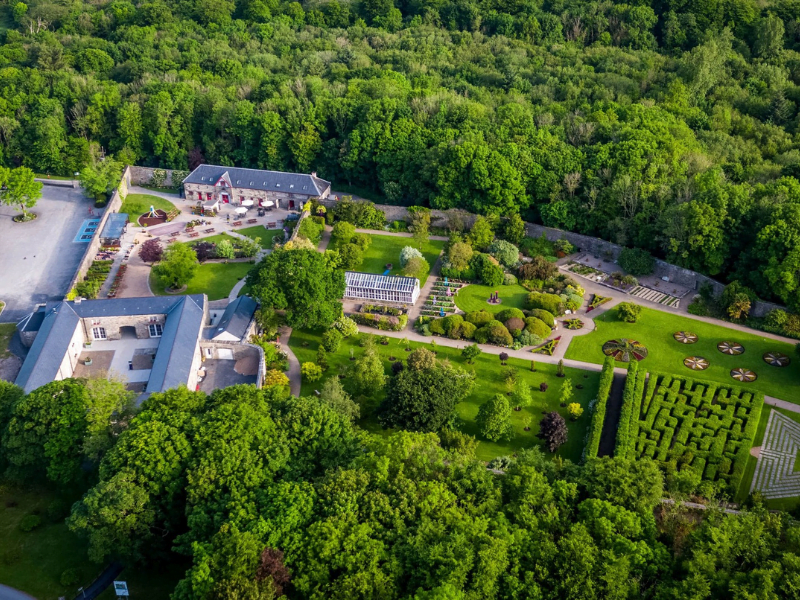
Gracious gravel paths lead you around the massive tree collection, unusual water features and a tapestry of floral wonder.
Magnolias, Acacias, Acers, oaks, monkey puzzle trees, bamboo, ferns, banana trees and Hydrangeas are all part of the visual extravaganza.
To visit the garden is also an opportunity to relive the outdoor lifestyle of the Vandeleur period – as the whimsy of a unique, horizontal maze gives way to a charming summer house, elegant Victorian glass house.
Here is a space to explore, walk, discover and feel inspired by all it has to offer: a reminder that while times change, nature’s story goes on.
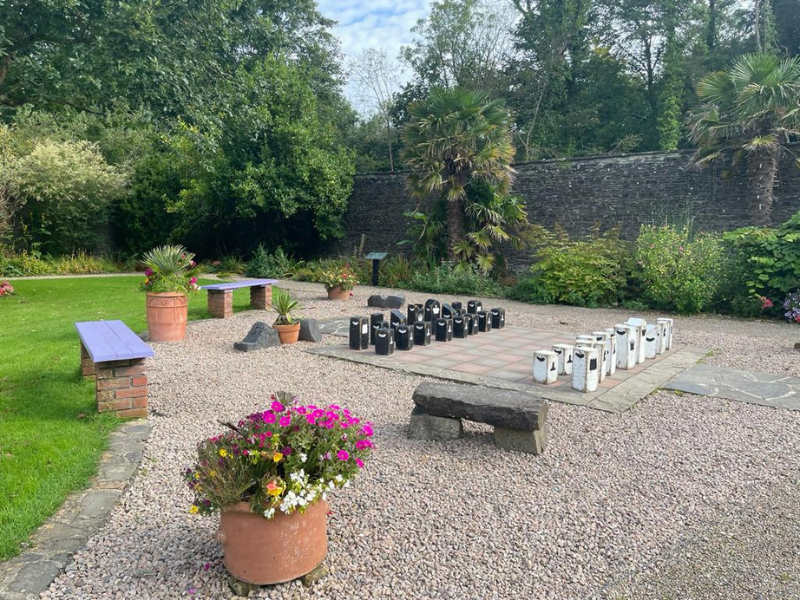
Garden Features
The West Wall (North End)
Be sure to see the Sarcococca confuse – the first plant to be replanted in the garden by Peter and Wendy Vandeleur of Australia. This nestles alongside white flowering shrubs and herbaceous plants including Eucommia bicolour, Pseudowintera colorata and Libertia grandiflora.
The Well
A catchment area for water for the original garden.
The North Wall (West and East End)
A fascinating selection of tender plants along this border such as Acacia baileyana ‘Purpurea’ and Musa basjoo (banana).
The Glasshouse
The site of the original lean-to glasshouse. The old iron pipes protruding from the wall tell us that this building was heated – to help grow fruit and cut flowers.
More Features
Hebe Collection
The garden’s microclimate is perfect for this tender species, native of New Zealand.
Summer House
The perfect vantage point from which to take in the many views of the garden. The house is wheelchair accessible.
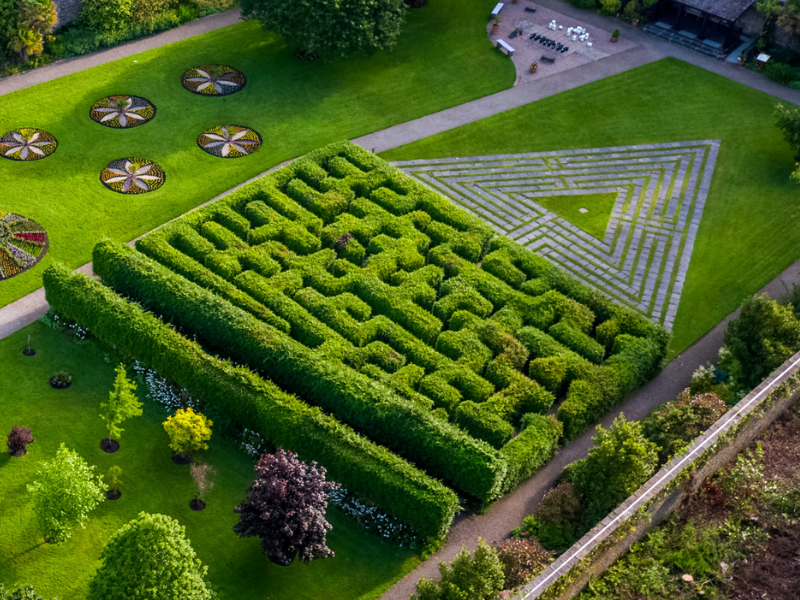
Horizontal Maze
An unusual ‘flat’ maze, this is often the stage for many of the garden’s outdoor events.
and More..
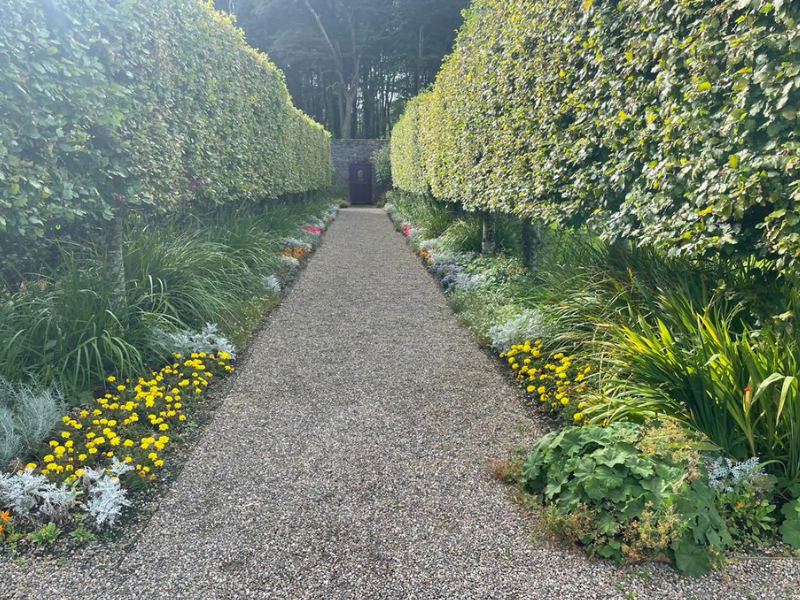
Beech Maze
The false purple door half way along the South Wall border marks the location of the original main garden entrance into the garden, from Kilrush House. The beech trees here have been unusually trained into espalier style (growing flat against the wall).
Arboretum
An exceptional collection of trees from the beautiful oak and mountain ash to the quirky monkeypuzzle tree.
Vandeleur Crest
A nod to the old family, incorporated into a port-hole feature as part of the garden’s new design.
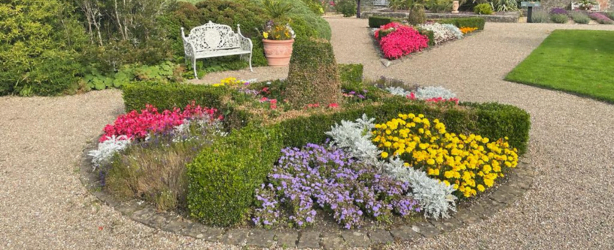
“A garden to walk in and immensity to dream in – what more could he ask? A few flowers at his feet and above him the stars.” Victor Hugo